Tampilkan postingan dengan label concurrent. Tampilkan semua postingan

Sabtu, 08 September 2018

SYLLABUS INTRO OF MECHANICS.

    BASIC ENGINEERING MECHANICS

Course Outcomes: Through this course, students should be able to


• Understand and analyze forces, moments and their applications in real life situations.
• Describe the static equilibrium of particles with Free body diagram.
• Analyze the concepts of moment of inertia and its application in real life situations
• Formulate equations of motion for the rigid body using D'Alembert principle.

Unit I
               Introduction to Mechanics: Basic concepts, System of forces, Coplanar Concurrent Forces, Components in 2-D Plane-Resultant-Moment of Forces and its Applications, Couples and Resultant of Force System, Equilibrium of System of forces, Free body diagrams, Equations of Equilibrium of Co-planar Systems

Unit II             
              Friction: Introduction to friction, Types of friction, Limiting friction, Angle of friction, Laws of Friction, Static and Dynamic friction, Motion of bodies.

Unit III
            Centroid and Moment of Inertia: Centroids of areas and lines, Centroids of composite plates and wires, First moments of areas and lines, Moment of inertia of plane sections, Theorems of the moment of inertia, Center of gravity, Moment of inertia of standard and composite sections, Mass moment of inertia of thin plates

Unit IV
              Analysis of structures: Introduction to trusses, Definition of trusses, Simple trusses,  Analysis of truss by the method of joint, Analysis of truss by the method of the section.

Unit V
              Introduction to Dynamics: Basic terms, general principles in dynamics, Types of motion, Rectilinear motion, Plane curvilinear motion.

Unit VI
              Plane Kinematics and Kinetics of Rigid bodies : D' Alembert's principle and its applications in-plane motion and connected bodies, Work energy principle and its application in the plane motion of connected bodies, Kinetics of rigid body rotation.

Text Books:


1. VECTOR MECHANICS FOR ENGINEERS, STATICS AND DYNAMICS by BEER AND JOHNSTON, MCGRAW HILL EDUCATIONReferences:1. ENGINEERING MECHANICS: STATICS by ANDREW PYTEL | JAAN KIUSALAAS, CENGAGE LEARNING2. ENGINEERING MECHANICS by BASU DEB BHATTACHARYYA, OXFORD UNIVERSITY PRESS3. ENGINEERING MECHANICS - STATICS AND DYNAMICS by R. C. HIBBELER, A. GUPTA, PEARSON

3-D printers a revolutionary frontier for medicine.

What is 3-D printing?

Additive manufacturing, or 3-D printing, use a digital model to build an object of any size or shape—by adding successive layers of material in a single continuous run. This layering capability allows the manufacturing of complex shapes, such as the intricate structure of bones or vascular channels, that would be impossible to create by other methods.
Advances in computer design and the ability to translate medical imaging—such as X-rays, computerized tomography (CT), magnetic resonance imaging (MRI) or ultrasound—to digital models that can be read by 3-D printers are expanding its applications in health care. 3-D printing is opening a horizon of amazing possibilities, such as bioprinting living tissues with "biological ink".

An advantage of 3-D printing technology is that it allows for personalization of health care—customized prostheses and tailor-made drugs and organs, for example. This technology may also decrease costs by disrupting supply chains and lowering the production costs of medical devices, surgical instruments and other health-care products.

In 2013, there were 10 million 3-D-printed hearing aids in circulation worldwide. This huge impact in the hearing aid industry has been called the "quiet revolution" as it has gone almost unnoticed. Before 3-D printing, it took one week to manufacture a hearing aid; now it takes only a few hours. The development of sophisticated and accurate 3-D oral scanners and new 3-D printing dental materials has also catapulted 3-D printing as a disruptive technology in dentistry.

In 2016, the Food and Drug Administration Agency (FDA) approved 3-D printing denture material and this set the stage for dentists to introduce 3-D-printing manufacturing laboratories into their offices. The idea of producing crowns, orthodontic appliances or removable dentures with a push of a button in your dentist's office is not Printing living organs. An exciting area with huge potential for the future is the manufacturing of 3-D-printed drugs. The first 3-D-printed drug approved by the FDA is the anti-seizure medication Sprint am. The 3-D printing process enables the creation of a highly porous structure that can load a large dosage of the active compound into a rapidly dissolvable pill.

This possibility of highly personalized drugs, which optimize beneficial effects while reducing side effects, made in real-time using digital recipes could radically change the pharmaceutical industry. One of the most promising 3-D printing technological advances is the bioprinting of living tissue. Great strides have been made in manufacturing tissue constructs that could eventually be used for organ transplants.

The clinical manufacturing of biologically active complex structures such as functional skeletal muscle or liver tissue is promising. The recent commercialization of functional human liver or kidney constructs—the so-called "lab on a chip organ"—will have a huge impact on medical research, drug discovery and toxicology. It could possibly reduce the need to use experimental animal models. Although we may be far away from surgery on Mars using 3-D printing technology, the advances on earth are already changing health care.


2025 tech predictions both thrilling and scary

We humans will be walking, running, sleeping data streams pumping out constantly updated metrics that will be both safeguarded and valuable. We'll do our jobs with the assistance of artificial intelligence to achieve better results faster.
And we'll leverage technological breakthroughs to create digital gatekeepers that tame the information-overload beast. At least that's the idealized vision of our society 10 years down the road, according to a new report out Thursday from the Institute for the Future called Information Generation: Transforming the Future Today. The project was commissioned by cloud-storage company EMC, with quantitative research conducted by Vanson Bourne.

And if things don't go as planned and all our data are allowed to bolt out of the corral?

"Well that's the dance that's happening now," says Rachel Maguire, research director at Institute for the Future, a non-profit think tank. "We're in the age of omnipresence, so the question is, can we solve for the privacy issue so we and future generations can enjoy the benefits of technology?"

The institute's report identifies five "key directional shifts" in the coming decade. The first is the information economy, which will find the data we generate from workouts and shopping sprees either being securely cached at our directive or else sold, donated or traded for financial or social gain. Commerce in the data arena will be able to do everything from literally enrich us to helping society at large via the secure transfer of genomic data. Related in many ways is the second shift, which will find a mushrooming army of connected devices – from cars to toasters – that will relay information and trends to each other and, via the Internet, the companies that manufacture them.

The advantages of such sentient hardware range from self-piloting or pilot-assisted cars that can better navigate their surroundings and avoid accidents to freezers that can automatically place orders for your dwindling stash of Rocky Road.

"All this data exhaust inherently generates privacy concerns and the need for protecting that data," says Maguire, adding that she's buoyed by the progress being made on a variety of fronts to protect personal data. "We must have ownership and oversight of our data."

The third big shift is made by the information generation – those growing up in the era of Internet ubiquity – is in the arena of augmented decision making. "Tech leaders increasingly are saying that we're moving to a world where employees with smart decision-support systems in the workplace," says Maguire, citing the example of a doctor pulling from reams of research at the click of a mouse. "We're not talking about job displacement by AI (artificial intelligence) robots. We're talking about having workplace tools that let us do our jobs better."
Examples of this approach include Hong Kong's efficient subway system, which uses AI systems to run simulated train lines to determine the best possible timetable while saving the company nearly $1 million a year, she says.

"The fourth coming shift is dubbed "multi-sensory communication," and is perhaps best exemplified by one feature of Apple Watch. Using a built-in tech that can tap its user on the wrist with a burst of energy, Watch is capable of relaying wearers' heartbeats from watch to watch. Maguire calls this just the tip of an iceberg of tech innovations whose mission is to save us from information overload.
"The next decade will find us receiving information in new ways, using new senses," she says, citing Marriott Hotels' Teleporter, a roving device that allows visitors to be whisked away to properties around the world thanks to the magic of Facebook-owned Oculus Rift virtual reality goggles.

"Some of this stuff might be clunky now, but early indications are that these breakthroughs will become less contrived and more organic," she says. "Soon we simply won't be just taking things in through screens. "The last shift circles back to the first. Under the heading "privacy-enhancing tech" are predictions of cryptographic breakthroughs that hopefully will deliver us from a reality where it seems every major outfit is being hacked on an almost daily basis of all the shifts, however, this one clearly deserves the most attention. Without encrypted and secure data transfer, our digital lives will fast become an open book.

I, Me and my Career: Plan before it's too late

Planning Career Prospects in India

The unhitched male of Planning is an undergrad level Bachelor's Degree program. Numerous perusers have been getting some information about this expert course. Most inquiries spun around the profession prospects, nature of work and 'future extension' related with this course. In the wake of noting numerous such inquiries, I chose to think of an article where the previously mentioned points of interest will be talked about in detail.

In this article, you will read about vocation prospects and extension related with Bachelor of Planning course. You will read about different employment that is accessible before Bachelor of Planning graduates, nature of their work, surely understood enrollment specialists and PG courses accessible before graduates.

In the wake of finishing a Bachelor of Planning course, graduates may either begin working or go for additionally thinks about (PG courses). Most importantly, let us look at the 'employment' part. From that point forward, you will read about PG courses and further examinations.

CAREER PROSPECTS AND JOB OPPORTUNITIES

In the wake of finishing the 4 years in length Bachelor of Planning course, graduates may begin filling in as expert organizers for Government or Private ventures and setups.

Organizers have differing openings for work accessible before them. The planning graduates approaches both Government and in addition Private area openings for work.

WELL KNOWN RECRUITERS
Government Departments identified with Urban and Town arranging, Government worked Housing plans, Government Transportation Projects (Highways, Railways and Metros and so on), Government Construction and restoration ventures, PWD work posts, Municipal Corporation work posts and so on are outstanding Government openings for work accessible before arranging graduates. Government offices dealing with previously mentioned and additionally comparable administrations are known to enlist arranging experts.

With regards to the private part, firms enjoyed Realty Development, Construction firms, Architecture and Interior Design firms, Public Structure Construction firms (PPP demonstrate like streets and extensions and so forth), NGOs and so forth are known to enroll arranging experts.

Independent work openings are additionally accessible before arranging experts. Beginning a consultancy benefit is the principal thing that strikes a chord, discussing independent work.

NATURE OF WORK
An arranging proficient's fundamental assignment is to make ideal utilization of assets accessible before him/her and make utilitarian and agreeable constructed condition utilizing those assets. Organizers are engaged with configuration, arranging and development of human settlements, urban communities and towns. They are additionally associated with the arranging, plan and making of administrations and offices valuable to the general public, for example, transportation frameworks, waste frameworks, clean frameworks, water supply frameworks and so on.

Configuration, arranging, looking over, demonstrate making, cost estimation, man administration and task administration frame an essential piece of an arranging proficient's activity. To a degree, site visits, supervision and field trips likewise are engaged with this calling.

PG COURSES AND FURTHER STUDIES

Bachelor of Planning graduates are eligible to pursue Master of Planning as well as relevant M.Tech. and M.Sc. courses. Other than Master’s Degree courses, graduates are also eligible to pursue relevant PG Diploma courses!

  • Master of Planning course can be pursued to specialize in disciplines such as-
  • Transport Planning
  • Landscape Architecture
  • Housing
  • Urban Design and Planning
  • Architectural Conservation and Restoration
  • Housing
  • Environmental Planning
SALARY

At the start, Planning professionals may earn anywhere between 15-40k Rupees per month. Starting salary depends on factors like the profile of the employer (Government job, Private sector job or entrepreneurship), job profile, the location of the job etc. With time, planning professionals may gain valuable work experience. Along with work experience, salary figure will also rise up!

how to plan your career prior to Completion of Graduation...

Click here: I, Me and MY CAREER

GST Council clears e-way bill mechanism, to be rolled out by June 1

Merchandise and Ventures Tax (GST) Council on Saturday chose to go for early execution of e-Way Bill for between state development of things from February 1. For a consistent development of merchandise crosswise over states, the Goods and Services Tax (GST) Council on Saturday chose to go for early usage of e-Way Bill for between state development of things from February 1 and uniform required consistency from June one year from now.

"The principles for usage of across the nation e-way Bill framework for between State development of products on a mandatory premise will be advised with impact from February 1, 2018. This will bring consistency over the states for consistency between state development of merchandise. "Be that as it may, regardless uniform arrangement of e-route Bill for between State and intra-State development will be actualized the nation over by first June 2018," a fund service public statement said here after the 24th gathering of the GST chamber held through video meeting.

An e-Way Bill is required for the development of merchandise worth more than Rs 50,000. The across the country e-way Bill framework will be prepared to be taken off on a preliminary premise most recent by January 16, 2018.

Exchange and transporters can begin utilizing this framework on a willful premise from January 16, 2018. "While the framework for both between state and intra-state e-Way Bill age will be prepared by January 16, 2018, the states may pick their own particular timings for usage of e-Way Bill for intra-state development of products on any date before June 1, 2018," the announcement elucidated.

There are sure states which are as of now having the arrangement of e-Way Bill for intra-state and in addition between state development and a portion of those states can be early adopters of national e-Way Bill framework for intra-state development additionally, it said. Till such time as National e-way Bill is prepared, the states were approved to proceed with their own different e-Way Bill frameworks.

"Be that as it may, it was spoken to by the exchange and transporters this is causing undue hardship in between state development of merchandise and along these lines, getting an early all India arrangement of e-Way Bill has turned into a necessity."As the aggregate income gathered under GST fell by around 10 for each penny to Rs 83,346 crore for the long stretch of October from over Rs 92,000 crore in September, the administration felt since execution of a portion of the principal highlights of GST, for example, coordinating of profits, e-path charge and in addition invert charge component have been delayed, the expense consistency was not up to the stamp

MCQsCentroid of Area/Lamina MCQs

Centroid of Area/Lamina

Q1) Which of the following laminas do not have centroid at its geometrical centre?

a. Circle
b. Equilateral triangle
c. Right angled triangleπŸ‘ˆ
d. None of the above

Q2) If a material has no uniform density throughout the body, then the position of centroid and centre of mass are ________

a. identical
b. not identical πŸ‘ˆ
c. independent upon the density
d. unpredictable

Q3) What is the centroidal distance along the line of symmetry XO for the quarter circle shown below?
(where D= 4r/3Ο€)


a. √(1/D)
b. √D
c. √2 (D) πŸ‘ˆ
d. √2 (D2)

Q4) What is the angle made by side of a square lamina if it is freely suspended from a corner with the horizontal?

a. 0°
b. 45°πŸ‘ˆ
c. 90°
d. 180°

Q5) What is the C.G of an isosceles triangle of base 20 cm and side 40?

a. 12.90 cmπŸ‘ˆ
b. 13.28 cm
c. 19.36 cm
d. 38.72 cm

Q6) Uniformly distributed the load of 5 kN acts on a simply supported beam of length 10 m. What are the reactions at the end points of the beam?

a. 12.5 kN
b. 25 kNπŸ‘ˆ
c. 50 kN
d. None of the above

Q7) What is the centroidal distance of an equilateral triangle of side 2 m?

a. 0.866 m
b. 0.769 m.
c. 1.000 m
d. 0.577 mπŸ‘ˆ

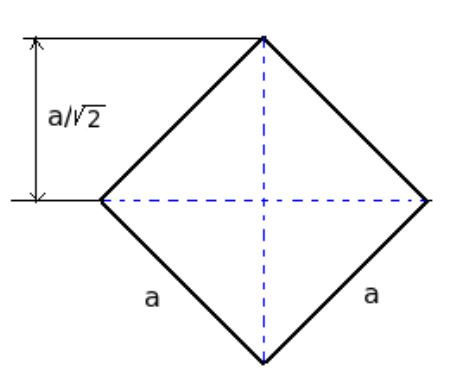
Q8) What is the distance of centroid with respect to diagonal shown in the diagram below?


a. a /√3
b. a /√2
c. a /√18πŸ‘ˆ
d. 3a /√2

Q9) Which method is used to determine the centroid of a composite figure?

a. Analytical method
b. Graphical method
c. Both a. and b.πŸ‘ˆ
d. None of the above

Q10) Moment of Inertia of a rectangular section about any axis=
a.  bd^3/12
b.  db^3/12
c.  bd^3/12 + Ax^2πŸ‘ˆ
d.  Ο€d^4/64

Where b=width, A=Area of the cross section, d=depth for rectangular section and diameter of circular
sections, x=distance between the centroid of the section from the axis.

Q11) Centroid of a section about X axis is:

a. About which ∫y^2dA =0
b. About which ∫ydA=0πŸ‘ˆ
c. About which ∫xydA=0
d. About which ∫x^2y^2dA=0

Q12) Moment of inertia of a section about X axis is

a. ∫y^2dAπŸ‘ˆ
b. ∫ydA
c. ∫xydA
d. ∫x^2y^2dA

Nokia 2 With Snapdragon 212 & 4100mAh Fails To Impress Due To Its 99 Euros Price Tag

The Nokia mark name that was sold to HMD Global by the parent organization has neglected to live up the publicity. HMD Global kept money intensely on Nokia wistfulness and brand esteem, however, unfortunately, did not foresee the hardened rivalry that it faces in a key market like India. HMD Global needs a bit of the greatest cell phone advertising on the planet and is urgently attempting to satisfy the requesting buyer, however, has it done what's necessary? They propelled the new Nokia 2 in India where they realize that section level gadgets are in colossal request, however, have they satisfied the desires? How about we discover in the accompanying sections.

HMD Global had planned the occasion at 12noon and being a Nokia fan I needed to tune in to the live stream. We as a whole realized that the Nokia 2 was touted to be propelled in light of the fact that somebody in HMD Global utilized Antutu benchmark to test the cell phone. You see once a cell phone is tried on Antutu its spec sheet can be gotten to by anybody. The general population at HMD Global began off by saying that they had widely addressed the Indian clients and needed to know how they organize the cell phone necessities. The survey comes about uncovered that battery life was an essential concern, trailed by the show, LTE network and camera. They chose to fabricate the Nokia 2 utilizing these criteria.

The Nokia 2 has a 5inch HD determination LTPS show. The LTPS show which is encased in Corning Gorilla Glass is said to be more power proficient than TFT boards that are at present accessible in the market. They are likewise demonstrated to give dynamic shading generation and a higher difference proportion. Nokia at that point took the greatest individuals' demand and included in a 4100mAh battery the Nokia 2 which ensures two days battery life regardless of whether you utilize your cell phone for 5 long periods of screen time every day. Since the Indian gathering of people needs the quicker network, they have included LTE availability with the assistance of the Qualcomm Snapdragon 212 chipset.

Since remaining solitary cameras have been supplanted by cell phone cameras, Nokia has included an 8MP back camera with LED streak on the front of a 5MP camera for better photographs. You likewise get boundless distributed storage of photographs with Google Photos.HMD Global have satisfied their guarantee of unadulterated Android and included the Nokia 2 with Android 7.1.1 Nougat. They guarantee that the Nokia 2 will be moved up to Android Oreo later on. The Nokia 2 will be propelled in November and will be accessible online and also disconnected in Pewter Black, Pewter White and Copper shading variations.

So for what reason does this cell phone neglect to inspire us even after all these appealing highlights? We will now rattle off its blemishes. To begin with, we have 1.3GHz quad-centre CPU which is certainly not a poor entertainer however it is combined with only 1GB of LPDDR3 RAM. This implies you should state farewell to multitasking. The following obstacle is the inner memory which is an irrelevant 8GB. While we realize that the passage level client won't utilize numerous applications and he/she even has a possibility for moving some applications to SD card, we fear the WhatsApp beast which powers all media to be put away on the interior memory and this implies your inward memory will be drained quick. The last and the greatest imperfection of the Nokia 2 is its sticker price. At the dispatch occasion, it was declared that the Nokia 2 will retail for 99 Euros or 7462 INR. Presently while this may not mirror the genuine Indian valuing we are certain the Nokia 2 will retail for someplace around the seven thousand checks. This turns into an enormous issue for HMD Global as they confront extreme rivalry from less expensive and more effective entertainers like the Xiaomi Redmi 4A and Moto C Plus.


Kinematics (Rectilinear and Curvilinear Motion)

Kinematics 

Kinematics is a branch of classical mechanics that describes the motion of points, bodies (objects), and systems of bodies (groups of objects) without considering the mass of each of the forces that caused the motion.

Kinematics is the mathematical description of motion. The term is derived from the Greek word kinema, meaning movement. In order to quantify motion,
a mathematical coordinate system, called a reference frame, is used to describe space and time. Once a reference frame has been chosen, we can introduce the physical concepts of position, velocity and acceleration in a mathematically precise manner. The figure shows a Cartesian coordinate system in one dimension with unit vector Λ†i pointing in the direction of increasing x -coordinate.
Figure: A one-dimensional Cartesian coordinate system.


IMPORTANT TERMS:-

Speed: The speed of a body may be defined as its rate of change of displacement with respect to its surroundings. The speed of a body is irrespective of its direction and is, thus, a scalar quantity.

Velocity: The velocity of a body may be defined as its rate of change of displacement, with respect to its surroundings, in a particular direction. As the velocity is always expressed in a particular direction, therefore it is a vector quantity.

Acceleration: The acceleration of a body may be defined as the rate of change of its velocity. It is said to be positive, when the velocity of a body increases with time, and negative when the velocity decreases with time. The negative acceleration is also called retardation. In general, the term acceleration is used to denote the rate at which the velocity is changing. It may be uniform or variable.

Uniform acceleration: If a body moves in such a way that its velocity changes in equal magnitudes in equal intervals of time, it is said to be moving with a uniform acceleration

Variable acceleration: If a body moves in such a way, that its velocity changes in unequal magnitudes in equal intervals of time, it is said to be moving with a variable acceleration.

Distance traversed: It is the total distance moved by a body. Mathematically, if body is moving with a uniform velocity (v), then in (t) seconds, the distance traversed

                                                                                s = v X t
In this chapter, we shall discuss the motion under uniform acceleration only.

  MOTION UNDER UNIFORM ACCELERATION
           

Consider the *linear motion of a particle starting from O and moving along OX with a uniform
acceleration as shown in Fig. 17.1. Let  P be its position after t seconds.
Let                                            u = Initial velocity,
                                                  v = Final velocity,
                                                  t = Time (in seconds) taken by the particle to change its velocity
                                                         from u to v.
                                                 a = Uniform positive acceleration, and
                                                 s = Distance travelled in t seconds.
Since in t seconds, the velocity of the particle has increased steadily from (u) to (v) at the
rate of a, therefore total increase in velocity
                                                     =   a t
                                           v =  u + a t ...(i)


MOTION UNDER FORCE OF GRAVITY

It is a particular case of motion, under a constant acceleration of (g) where its *value is taken as 9.8 m/s2. If there is a free fall under gravity, the expressions for velocity and distance travelled in terms of initial velocity, time and gravity acceleration will be :


But, if the motion takes place against the force of gravity, i.e., the particle is projected upwards, the corresponding equations will be :


Notes: 1. In this case, the value of u is taken as negative due to upward motion.

2. In this case, the distances in upward direction are taken as negative, while those in the

downward direction are taken as positive.


DISTANCE TRAVELLED IN THE nth SECOND

GRAPHICAL REPRESENTATION OF VELOCITY, TIME AND DISTANCE TRAVELLED BY A BODY

The motion of body may also be represented by means of a graph. Such a graph may be drawn by plotting velocity as ordinate and the corresponding time as abscissa as shown in Fig.

17.5. (a) and (b). Here we shall discuss the following two cases :

1. When the body is moving with a uniform velocity.


Consider the motion of a body, which is represented by the graph OABC as shown in Fig. 17.5(a). We know that the distance traversed by the body,

s = Velocity × Time

Thus we see that the area of the figure OABC (i.e., velocity × time) represents the distance, 


2. When the body is moving with a variable velocity


We know that the distance traversed by a body, traversed by the body, to some scale.

S= ut + 1/2 at²

From the geometry of the Fig. 17.5 (b), 

                                      we know that area of the figure OABC =  Area (OADC + ABD)
                                                            But area of figure OADC = u × t
and                                             
                                                 area of figure ABD = 1/2 × t × at =1/2 at²

∴ Total area OABC = S=ut+1/2 at²


Thus, we see that the area of the OABC represents the distance traversed by the body to some scale. From the figure, it is also seen

                                                                            tan Ξ± = at/t = a

Thus, tan Ξ± represents the acceleration of the body.

Example:- A train moving with a velocity of 30 km.p.h. has to slow down to 15 km.p.h.
due to repairs along the road. If the distance covered during retardation be one kilometer and that
covered during acceleration be half a kilometer, find the time lost in the journey.
                          ∴ Total time, t = t₁ + t₂ = 2.67 + 1.33 = 4 min

If the train had moved uniformly with a velocity of 30 km/hr,


                          then the time required to cover 1.5 km=60/30 * 3/2 =3 min. ...(iii)

                                                      ∴ Time lost = 4 – 3 = 1 min Ans.